“You are everything good and straight and fine and true – and I see that so clearly now, in the way you’ve carried yourself and listened to your own heart. You’ve changed me more than you know, and will always be a part of everything I am. That’s the one thing I’ve learned from this. No one you love is ever truly lost.”
Did he really love Hadley? Or did he use her as a rung in his climb to fame, the way he had used so many others? Just as in any marriage, no one can ever really know what goes on within it, except the two people involved. We can only guess, and surmise from the scraps of evidence the partners leave behind. In the Paris Wife, author Paula McLain does this admirably, gathering reams of research, then imagining what this part of Hemingway’s life was like for Hadley, the wife of his youth, and of Paris. We will never know whether he actually wrote this to her, but we do know that he dedicated his first bestseller to her.
When we meet Elizabeth Hadley Richardson and Ernest Hemingway in the opening pages, we already know their relationship is doomed, but we are compelled to try to understand why, when it seemed even at the end of his huge life, that he still loved her. We meet the two in Chicago, in 1921 – Hadley broken by family tragedy and rapidly approaching spinsterhood, and Ernest, equally damaged by his experience in the Great War, and by his failed first relationship. Both carry the shadows of suicide with them, shadows that would follow them and become part of their legend. Hadley is 8 years his senior, naive and inexperienced. They marry quickly, and just as quickly move to Paris so that Ernest can focus on his writing. (incidentally, as a foreign correspondent for the Toronto Star). There they are enfolded into the American expatriate community, the likes of Gertrude Stein, Alice Toklas, Ezra Pound, Dorothy Shakespear, and the Fitzgeralds, Scott and Zelda. The book details the glittering and alcohol-soaked life of 1920s Paris, Spain and Switzerland, the Hemingways’ brief foray to Toronto for the birth of their son, and the eventual disintegration of their lifestyle and marriage.
Before they were known as “the Lost Generation”, these were simply a group of people in the midst of a societal revolution. The world was throwing off the shackles of the Victorian Era. It was a time of free love, easy money, and flexible morals. Nothing seemed truly scandalous. We considered the similarities between the ’20s, the ’60s and today. Yes, was all fun at the time, but in the end they weren’t called “the Lost Generation” for nothing. Something to consider perhaps, for the “Hook-Up Generation” of today.
Hadley straddled two worlds, considering herself more Victorian than modern, and her struggle to define herself in her roles as wife, mother and friend is evident throughout the book. She found herself profoundly lonely in Paris, out of style and out of touch among the friends she met there. In a new world that valued autonomy and the newfound freedom of women, she watched from the edges as people redefined themselves. Swimming against the tide, Hadley tried valiantly to mold herself into someone she believed her husband wanted. She made his ambitions her own and supported him even when it cost her her dignity. We considered that it may have been this very facet of her personality that initially attracted Ernest. It may have also been why her absence is so painfully obvious in “the Sun Also Rises”. She never did fit in.
As a group and on the whole, I think we understood Hadley. No, we didn’t understand how she could have left her baby for months at a time, or why she stayed in the room when her best friend slipped between the sheets. But we did understand how she could have allowed herself to be naive, and how much she must have loved Ernest. The person we could not understand was Pauline. Did she befriend the couple with the intent to make Hemingway her own? How could she have continued the facade of a friendship with Hadley when everyone knew what was happening? We couldn’t say that we didn’t feel some Schadenfreude when we learned that in the end, Pauline’s fate with Ernest mirrored Hadley’s own.
We may not have liked Hemingway much, and probably didn’t identify with him, but we did see him as a person we may not have known before reading the book. Of course we know he was a complicated human being. Hemingway had a pattern of broken relationships in his life – from his marriages, to his family and his friendships, he never seemed to be able to make many of them last. F.Scott Fitzgerald famously quipped, “Ernest would always give a helping hand to a man on a ledge a little higher up.” He was obsessed with the bullfight, that epic battle between the individual and the mythic creature bent on destroying the hero. And of course, as history has shown, he was more than a little obsessed with his own larger-than-life persona. It was interesting to note that whether or not we liked the book, all of us were curious to research Hemingway further, and read, or perhaps re-read some of his work. This may have been part due to the few passages in the book that are written in Hemingway’s voice, and that we all thought gave the book an added dimension.
We talked about whether or not Hadley should have stuck it out and fought harder for her marriage. At the end of the book Hadley answers the question herself: “There are some who said I should have fought harder or longer than I did for my marriage, but in the end fighting for a love that was already gone felt like trying to live in the ruins of a lost city. I couldn’t bear it, and so I backed away – and the reason I could do it at all, the reason I was strong enough and had the legs and heart to do it is because Earnest had come along and changed me. he helped me see what I really was and what I could do. Now that I knew what I could bear, I would have to bear losing him.”
Hemingway’s last book, published posthumously, was “A Moveable Feast”, detailing his early years in Paris. Hadley figures prominently.
“Before you act, listen.
Before you react, think.
Before you spend, earn.
Before you criticize, wait.
Before you pray, forgive.
Before you quit, try.”

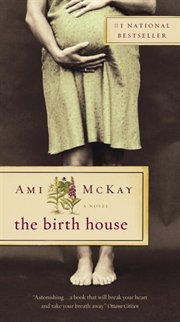 For the month of May, we’ve settled on The Birth House, by Ami McKay. This book was shortlisted for CBC Radio’s Canada Reads program in 2011, and although it didn’t win, it has garnered worldwide critical acclaim. The story is set in rural Nova Scotia in the time leading up the First World War. An obstetrition comes to a tiny Maritime town and opens up his shiny new clinic in which to deliver babies, pitting him against the local midwife. The story details life in a small Eastern Canadian town, but it is set against a backdrop of tumultuous societal upheaval. I can’t wait. We’ll have lots to discuss, I’m sure.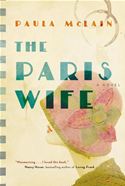

 Devereaux House Book Club