Alice Love is 29 years old, expecting her first child, madly in love with her husband Nick, and proud owner of a ramshackle fixer-upper. Except she’s not. After waking up from a whack on the head during a spin class (spin class? What exactly is a “spin class”?), she finds she’s almost 40 – a skinny, volunteering, momzilla to three, nearly divorced and the owner of a beautifully restored period home. The last ten years are lost to her, and she’s trying to hobble together a picture of the woman she’s become. A woman she discovers she doesn’t like very much.
“Had she turned into a hussy? A point-making hussy who went to the gym and upset her beloved sister and hosted ‘Kindegarten Cocktail Parties’? She hated the person she’d become. The only good part was the clothes.”
We found Alice to be a believeable and sympathetic character. We laughed with her and grieved with her and learned with her. The book was well-paced, keeping us interested and puzzled, along with Alice, as we tried to guess at how exactly Old Alice had transformed into New Alice. We found we all rushed through the last few pages of the book as the picture came into focus, and we understood, finally, all the perspectives of the characters we had been following throughout the story.
For all that we expected this book to be a light summer read , it was surprising that it did linger with us long after we had finished it. In an unobtrusive way, it made us stop and think; What were we like a decade ago? What were our dreams? Did we have children yet? How did we imagine our lives – ourselves, our children – in the future, when we were 20-something? What could we picture and what has happened to us in the ensuing years that we could have never imagined? Oh my God – are we still kind to our spouses?
“There just wasn’t enough time in 2008. It had become a limited resource. Back in 1998, the days were so much more spacious. Whe she woke up in the morning, the day rolled out in front of her like a long hallway for her to meander down, free to linger over the best parts. Days were so stingy now. Mean slivers of time. They flew by like speeding cars. Whoosh! When she was pulling back the blankets to into bed each night, it felt as if only seconds ago she’d been throwing them off to get up.”
We have all had experiences in the last ten years that have profoundly shaped us. Children of course, have a tendency to do that to people, but it was for many of us, also the various ways in which those children came to be in our lives, and how their experiences have shaped and changed us. Like Alice, many of us have experienced huge losses that we could have never predicted, nor could we have predicted how we navigated our way through them, or how they would alter our view of the world. At the same time, we found ourselves thinking about how it’s not just those big, life-altering events that change us, it is also the daily drip-drip-drip of tiny, unremarkable things that pile up over time until when we finally do find the time or the occasion to look back, we realize their collective impact has been as significant as those lightening-strike moments.
When Alice finally gets her memory back at the end of the book, in one quick rush, we gain an entirely new perspective on who Alice had become. We finally understand her anger at Nick, her friendship with Gina, her relationship with her sister Elizabeth, and with each of her children. Before the return of her memory, like Alice, we couldn’t understand how a love like the one between her and Nick could go so far off the rails. Afterwards, we said, “Ah, yes, of course. I understand now. Of course it wasn’t just a few cherries off the fruit platter.”
“It wasn’t just that her memories of the last ten years were back. It was that her true self, as formed by those ten years, was back. As seductive as it might have been to erase the grief and pain of the last ten years, it was also a lie. Young Alice was a fool. A sweet, innocent fool. Young Alice hadn’t experienced ten years of living….Now it seemed she could twist the lens on her life and see it from two entirely different perspectives. The perspective of her younger self. Her younger, sillier, innocent self. And her older, wiser, more cynical and sensible self.
And maybe sometimes, Young Alice had a point.”
Even the book’s somewhat predictable ending made us think. Alice contemplates the fact that she could have been happy with either Nick or Dominick, but when it came down to it, the time, the memories and the tapestry of their lives as a couple were what ultimately brought Alice and Nick back together.
I’m not sure I would have enjoyed this book if it had come along when I was in my mid-twenties. At this point in our lives though, when we’re so wrapped up in the busy-ness of children and work and aging parents, when it all seems to fly by at warp speed, it was a welcome respite. Once in a while, a book like this one comes along with a gentle reminder to step back, shift our perspective and take stock. It was a pleasant surprise.
“She had always thought that exquisitely happy time at the beginning of her relationship with Nick was the ultimate, the feeling they’d always be trying to replicate, to get back, but now she realized that was wrong. That was like comparing sparkling mineral water to French champagne. Early love is exciting and exhilarating. It’s light and bubbly. Anyone can love like that. But love after three children, after a separation and near-divorce, after you’ve hurt each other and forgiven each other, bored each other and surprised each other, after you’ve seen the worst and the best – well that sort of love is ineffable. it deserves its own word.”

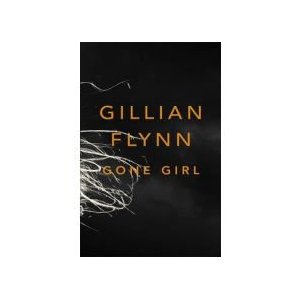 We’re switching gears again with our book for April. Gone Girl, by Gillian Flynn is a thriller that will keep you up at night with its twists and turns. On the morning of their fifth wedding anniversary, Nick’s beautiful, enigmatic wife Amy goes missing. Nick begins acting strangely as all eyes turn to him as the prime suspect. He may be acting strangely, but is he really a killer? This book will have you questioning how well you really know anyone you love.



 “Consider the fact that for 3.8 billion years, a period of time older than the Earth’s mountains and rivers and oceans, every one of your forebears on both sides has been attractive enough to find a mate, healthy enough to reproduce, and sufficiently blessed by fate and circumstances to live long enough to do so. Not one of your pertinent ancestors was squashed, devoured, drowned, starved, stuck fast, untimely wounded or otherwise deflected from its life’s quest of delivering a tiny charge of genetic material to the right partner at the right moment to perpetuate the only possible sequence of hereditary combinations that could result – eventually, astoundingly, and all too briefly – in you.”
 Devereaux House Book Club