At Home – A Short History of Private Life

A short history?  In his introduction, Bill Bryson says it was obvious to him that he would have to be painfully selective. His version of “selective” ended up in a 500-page rambling, digressive tome. It takes the reader, ostensibly, through Bryson’s 1851 rectory in rural England, and room by room tackles random facets of each. In his words, “Whatever happens in the world – whatever is discovered or created or bitterly fought over – eventually winds up, in one way or another, in your house…Houses aren’t refuges from history, they are where history ends up.”

By rights, this book should be as dull as sitting next to a verbose, short-sighted Latin professor at some mandatory dinner party, but somehow, it’s just…not.  Bryson reminds me of an enthusiastic kid at times, dragging a newcomer through his house. He runs and jumps from one topic to another with abandon, having no apparent goal in mind, except to amuse himself with an audience. Is there anything that doesn’t arouse his curiosity? Or his enthusiasm? Why are there salt and pepper shakers on the table?  Why not salt and cardamom?  Where did corn come from? Why are they called “chests” of drawers? Why were the English called “Limeys” and what is it with the British and their tea anyway? As Bryson answers these questions and many hundreds more, he opens the reader’s mind to reconsider long-held beliefs, and we found ourselves at times even laughing out loud (and then running after an innocent spouse to read to him from the book – again).

We didn’t all actually finish the book, but we all had fun reading what we did. Our conversation ran the gamut, from Thomas Edison who “had a vacuum where his conscience ought to be”, to servants who were treated in the same way we treat our modern appliances, to the history of toilets. We talked about ice as a commodity, the unbelievable diets of the 19th century and locusts the size of Yorkshire Terriers. Our conversation also turned to issues such as childbirth and illness, and reminded us all to take advantage of our modern medicine, and book a mammogram.

As Bryson points out, the history of private life is really a history of getting comfortable.  It is almost appalling to us now to think of our forebears who spent so much of generations past just trying to survive. Our own lives of cozy chairs, clean indoor air and soft beds would have seemed almost heavenly.  When you shower tomorrow morning, try to keep in mind that “by the 18th century, the most reliable way to get a bath was to be insane.”

Someone pointed out that At Home is an ideal book to just leave lying around, whether at home, or at the cottage. It is not a novel, or a story, but anyone, young or old, male or female, can pick it up, open to any page, and become instantly engrossed, even if you’ve read it before. It is just as easily put down again, waiting for the next time someone has a curiosity about something, or an even just an idle moment.  

If you enjoyed this book, it would be worth your while to pick up one of Bryson’s other books – the Life and Times of the Thunderbolt Kid, A Walk in the Woods, or Neither Here Nor There, are three that come to mind.  A note of caution – be careful reading Bryson in a public place, because guaranteed, people will look at you funny when you start shaking and snorting with laughter.


Bill Bryson“Consider the fact that for 3.8 billion years, a period of time older than the Earth’s mountains and rivers and oceans, every one of your forebears on both sides has been attractive enough to find a mate, healthy enough to reproduce, and sufficiently blessed by fate and circumstances to live long enough to do so. Not one of your pertinent ancestors was squashed, devoured, drowned, starved, stuck fast, untimely wounded or otherwise deflected from its life’s quest of delivering a tiny charge of genetic material to the right partner at the right moment to perpetuate the only possible sequence of hereditary combinations that could result – eventually, astoundingly, and all too briefly – in you.”
Bill Bryson, A Short History of Nearly Everything
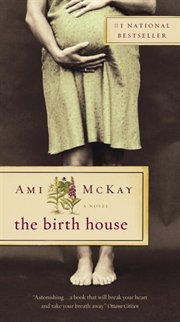
Spring Reading: The Birth House

I hope you’re all wading your way through At Home, and hopefully finding bits (or chunks) here and there that grab your attention. Take notes! Dogear your pages! Use the highlight feature in your eReader! Your mission, should you choose to accept it, is to finish the book, AND remember what you wanted to talk about. 

For the month of May, we’ve settled on The Birth House, by Ami McKay. This book was shortlisted for CBC Radio’s Canada Reads program in 2011, and although it didn’t win, it has garnered worldwide critical acclaim.  The story is set in rural Nova Scotia in the time leading up the First World War. An obstetrition comes to a tiny Maritime town and opens up his shiny new clinic in which to deliver babies, pitting him against the local midwife. The story details life in a small Eastern Canadian town, but it is set against a backdrop of tumultuous societal upheaval. I can’t wait. We’ll have lots to discuss, I’m sure.
Our next meeting will be on April 26, and our May meeting will be held on the 31st.  Mark your calendars!

“Perhaps if we saw what was ahead of us, and glimpsed the follies, and misfortunes that would befall us later on, we would all stay in our mother’s wombs, and then there would be nobody in the world but a great number of very fat, very irritated women.”
Lemony Snicket
  

Review: The Paris Wife

“You are everything good and straight and fine and true – and I see that so clearly now, in the way you’ve carried yourself and listened to your own heart.  You’ve changed me more than you know, and will always be a part of everything I am. That’s the one thing I’ve learned from this. No one you love is ever truly lost.”

Did he really love Hadley? Or did he use her as a rung in his climb to fame, the way he had used so many others? Just as in any marriage, no one can ever really know what goes on within it, except the two people involved.  We can only guess, and surmise from the scraps of evidence the partners leave behind. In the Paris Wife, author Paula McLain does this admirably, gathering reams of research, then imagining what this part of Hemingway’s life was like for Hadley, the wife of his youth, and of Paris. We will never know whether he actually wrote this to her, but we do know that he dedicated his first bestseller to her. 

When we meet Elizabeth Hadley Richardson and Ernest Hemingway in the opening pages, we already know their relationship is doomed, but we are compelled to try to understand why, when it seemed even at the end of his huge life, that he still loved her. We meet the two in Chicago, in 1921 – Hadley broken by family tragedy and rapidly approaching spinsterhood, and Ernest, equally damaged by his experience in the Great War, and by his failed first relationship. Both carry the shadows of suicide with them, shadows that would follow them and become part of their legend. Hadley is 8 years his senior, naive and inexperienced. They marry quickly, and just as quickly move to Paris so that Ernest can focus on his writing. (incidentally, as a foreign correspondent for the Toronto Star). There they are enfolded into the American expatriate community, the likes of Gertrude Stein, Alice Toklas, Ezra Pound, Dorothy Shakespear, and the Fitzgeralds, Scott and Zelda.  The book details the glittering and alcohol-soaked life of 1920s Paris, Spain and Switzerland, the Hemingways’ brief foray to Toronto for the birth of their son, and the eventual disintegration of their lifestyle and marriage.

Before they were known as “the Lost Generation”, these were simply a group of people in the midst of a societal revolution. The world was throwing off the shackles of the Victorian Era. It was a time of free love, easy money, and flexible morals.  Nothing seemed truly scandalous. We considered the similarities between the ’20s, the ’60s and today. Yes, was all fun at the time, but in the end they weren’t called “the Lost Generation” for nothing. Something to consider perhaps, for the “Hook-Up Generation” of today.

Hadley straddled two worlds, considering herself more Victorian than modern, and her struggle to define herself in her roles as wife, mother and friend is evident throughout the book. She found herself profoundly lonely in Paris, out of style and out of touch among the friends she met there. In a new world that valued autonomy and the newfound freedom of women, she watched from the edges as people redefined themselves. Swimming against the tide, Hadley tried valiantly to mold herself into someone she believed her husband wanted. She made his ambitions her own and supported him even when it cost her her dignity. We considered that it may have been this very facet of her personality that initially attracted Ernest. It may have also been why her absence is so painfully obvious in “the Sun Also Rises”. She never did fit in.

As a group and on the whole, I think we understood Hadley. No, we didn’t understand how she could have left her baby for months at a time, or why she stayed in the room when her best friend slipped between the sheets. But we did understand how she could have allowed herself to be naive, and how much she must have loved Ernest. The person we could not understand was Pauline. Did she befriend the couple with the intent to make Hemingway her own? How could she have continued the facade of a friendship with Hadley when everyone knew what was happening? We couldn’t say that we didn’t feel some Schadenfreude when we learned that in the end, Pauline’s fate with Ernest mirrored Hadley’s own.

We may not have liked Hemingway much, and probably didn’t identify with him, but we did see him as a person we may not have known before reading the book. Of course we know he was a complicated human being. Hemingway had a pattern of broken relationships in his life – from his marriages, to his family and his friendships, he never seemed to be able to make many of them last.  F.Scott Fitzgerald famously quipped, “Ernest would always give a helping hand to a man on a ledge a little higher up.” He was obsessed with the bullfight, that epic battle between the individual and the mythic creature bent on destroying the hero. And of course, as history has shown, he was more than a little obsessed with his own larger-than-life persona. It was interesting to note that whether or not we liked the book, all of us were curious to research Hemingway further, and read, or perhaps re-read some of his work. This may have been part due to the few passages in the book that are written in Hemingway’s voice, and that we all thought gave the book an added dimension.

We talked about whether or not Hadley should have stuck it out and fought harder for her marriage. At the end of the book Hadley answers the question herself:  “There are some who said I should have fought harder or longer than I did for my marriage, but in the end fighting for a love that was already gone felt like trying to live in the ruins of a lost city.  I couldn’t bear it, and so I backed away – and the reason I could do it at all, the reason I was strong enough and had the legs and heart to do it is because Earnest had come along and changed me. he helped me see what I really was and what I could do. Now that I knew what I could bear, I would have to bear losing him.”

Hemingway’s last book, published posthumously, was “A Moveable Feast”, detailing his early years in Paris. Hadley figures prominently.

“Before you act, listen.
Before you react, think.
Before you spend, earn.
Before you criticize, wait.
Before you pray, forgive.
Before you quit, try.”

Ernest Hemingway

New Books for March and April

The Paris Wife, by Paula McLain was chosen as our book for the month of March.   It’s time to brush up on our literature! This book was released last year, and tells the story of Ernest Hemingway from the unique perspective of his first wife, Hadley. In it, we are introduced to the Paris of the Lost Generation, and meet literary giants such as Scott and Zelda Fitzgerald, Gertrude Stein and Ezra Pound through the eyes of Hadley. Hemingway was said to have quoted: “I wish I had died before I loved anyone but her.” 

That right there is a compelling enough reason for me to read the book.

The book for the month of April is Bill Bryson’s At Home: A Short History of Domestic Life.  Be warned! This is a big book.  Hopefully some downtime during March Break may give you opportunities to make a dent in it before the end of April. (I know – downtime? Ha!) Take notes while reading – there is much to digest and discuss in this book.   It defies categorization – not a novel, yet much more than just a dust-dry collection of facts.  I’m sure you’ll enjoy it, all the while being surprised that you do.

“The worst thing about new books is that they keep us from reading the old ones.”
Joseph Joubert

And May the Odds Be Ever In Your Favour…

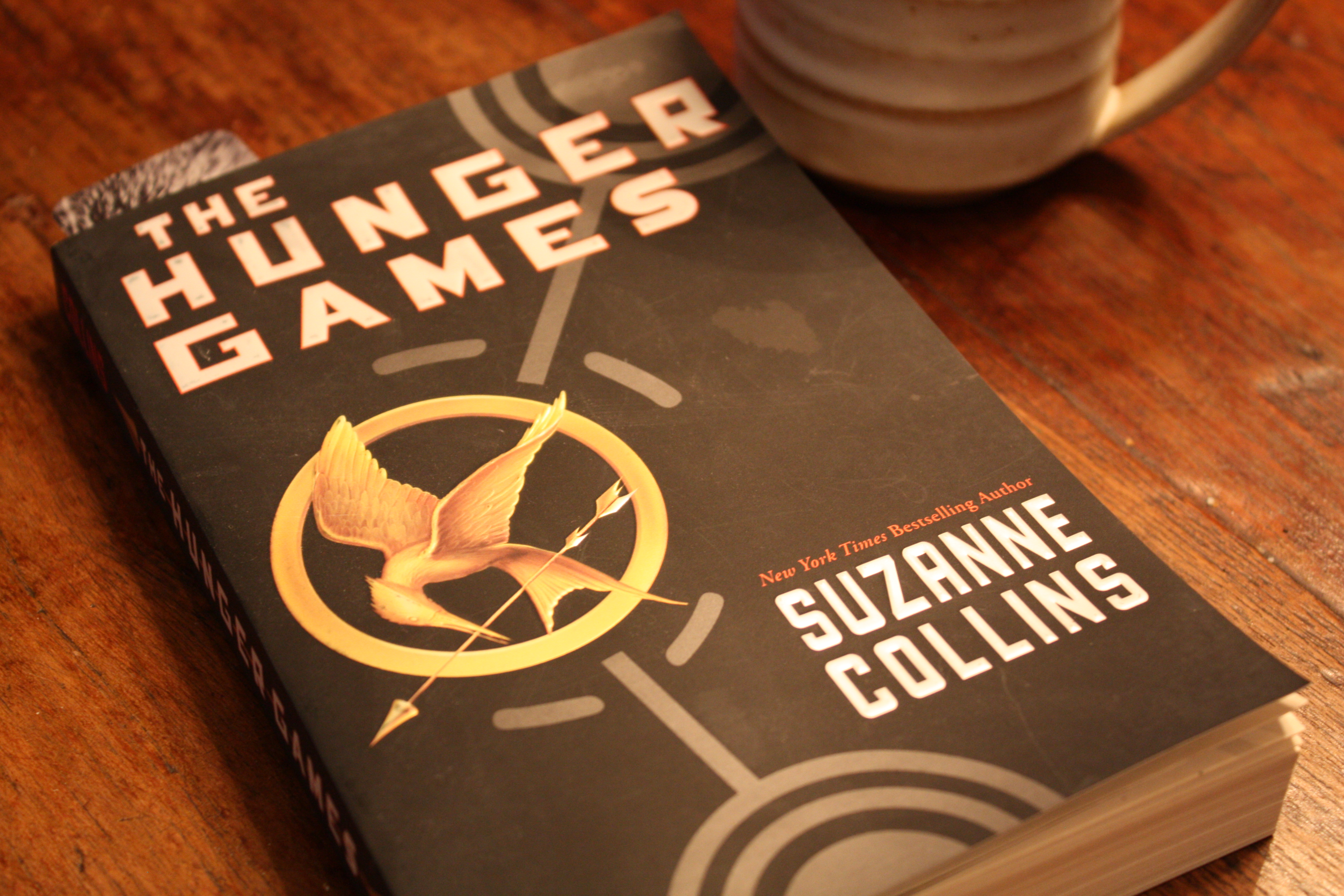
So begin the 74th annual Hunger Games, in the futuristic state of Panem.  Two representatives (Tributes), one boy and one girl from each of the twelve districts of the state, are chosen by lottery to compete to the death in an arena in the Capitol. The Games are televised throughout the entire country and it is mandatory that all citizens watch. The protagonist, 16-year-old Katniss Everdeen decides to stand in for her 12-year-old sister Primrose when Prim’s name comes up in the draw. Katniss, along with her co-competitor, Peeta Mellark, travel to the Capitol, where they are fed, primped and coached to compete in the Games. It is in the Capitol that Peeta finally reveals his life-long love for Katniss, and in doing so, the rules of the game are changed, such that in the end, (spoiler alert!) both Peeta and Katniss are allowed to survive and win the Game together.

It was apparent when the 11 of us arrived at Devereaux House that we were all eager to sit down and begin our discussion. There was very little preamble! The obvious first question was whether we liked the book. With a couple of exceptions, the consensus was overwhelmingly positive. Most of us found ourselves immediately drawn into the story and said the book was almost impossible to put down. We liked the action and adventure aspect, as well the fast pace of the first-person narrative. We also liked the romance with the twist of the love triangle. We were all moved by the writing when Rue, the youngest contestant, died, and Katniss decorated her body with flowers.

We talked about why Peeta joined with the Careers at the start of the Games after telling her and the world that he loved her. Was it to stay close to his enemies in order to try to protect Katniss? Or could it have been that the Careers needed him in order to take Katniss out of the Game quickly? Did we think that Katniss really did love Peeta, or was she confused by her feelings for him, and her feelings for Gale?

The romance between Katniss and Peeta, and the relationship between Gale and Katniss provided an interesting counterpoint to the violence in the story, and we thought this was a way to engage female readers. Those of us with daughters who had read the book said the girls loved the romantic elements of the book, whereas those of us with sons, said the boys enjoyed the action, adventure and rapid pace. Indeed, there is something for everyone!

We were a group of women and mothers discussing the book, however, this is a novel written primarily for a Young Adult audience (grade 7 and up). We all know, or know of, readers as young as Grade 4 who have read the book. We discussed whether a book with this subject matter was appropriate for kids, and if so, for what ages.  Most of us recalled reading William Golding’s “Lord of the Flies”, but seemed to remember being slightly older – late middle school or high school – when we read the book.  It must have made an impression on us because so many of us remember it so vividly. As such, we wondered whether younger kids would have the capability for analysis in “Hunger Games”, especially given the dark themes in this trilogy of books. There was no question that “Hunger Games” is a disturbing book, but is there a chance for hope and redemption within it to offset those themes? Would Good vs Evil play out in a way that kids would be able to recognise it, and question it, when it seemed like Good was not winning the battle?

With the exception of a few, we felt there is redemption, and for that reason, many of us said it is a book that we would allow, or encourage our kids to read.  Katniss, after all, makes a compelling female role model. She sacrifices herself without hesitation for her younger sister. She is strong and smart, confident and capable. She captures the hearts of not one, but two boys, and never panders, or plays second fiddle to either. She tries very hard throughout the horrors of the Games, to remain true to her values, and to herself. Peeta declares his love for Katniss and tries at all costs to himself to protect her. Haymitch becomes and ally rather than an enemy, and Katniss finds a surprising friend ship with Cinna, and then with the Avox girl. Some of us however, depending on our feelings about the book, and the ages or temperments of our kids, felt strongly that we did not want our kids to read it.

We all heartily agreed though, that this is a book that should be discussed with our kids if they read it. The issues addressed – the politics, the violence and murder, the reality-tv aspects, and the parallels to our modern society are very often morally complex, and more explanation might be needed for kids who are reading this book and just beginning to expand and explore their understanding of the world.

As the evening wound down, those of us who hadn’t read the other two books in the trilogy were strongly encouraged to do so. We were told that many explanations are given in the following books to questions left dangling in the first.

I have a strong feeling we’re not done with these books yet – we may just need to have a follow-up evening to this series.  In any case, details for a dinner-and-a-movie night will come next month. We’re all anxious to see Katniss on the big screen!

  “Be excellent to each other.”  Bill and Ted, from Bill & Ted’s Excellent Adventure

Here We Go

Original House Photo Taken Sometime Before WWI

Despite some nasty weather, nine hopeful and excited book club members arrived last night to launch the Devereaux House’s first book club. Ann Lawlor, Chair of the Friends of Devereaux House, took us on a tour of the home and gave us a brief history of the building and surrounding lands. It was fascinatng to learn about the house, it’s origins, its decline, and ultimately, the incredible story of its restoration. I’m sure we’ve all driven by it hundreds of times and wondered about it.  Now we know!  Walking through the house feels like stepping back in time.  It will make a fantastic backdrop to some of our more historical books. What a beautiful piece of Halton’s  past in which to hold our meetings. Thank you Ann – both for the tour, and for all your hard work and dedication to the house and to the community! You can learn more about the house here:  www.devereauxhouse.ca

Next came the boring stuff.  As a group, we needed to make a few decisions.  First, we decided to commit to meeting at Devereaux House the last Thursday evening of every month up to and including January 2013. A fee structure for membership will be determined and communicated separately. At this time, we also decided that new members would be added on a case-by-case basis and would be discussed with the group before invitations are extended.  In the future, if the group becomes larger that is conducive to good discussion, we have some options to help manage numbers.  At this time, our current membership of approximately 15 feels just about right.

Then came the fun part.  From a list of about 22 books, we narrowed the reading list down to 11, with a few more on a “Maybe” list. With no further ado, here is the list:

  • the Birth House
  • the Book Thief
  • the View From Castle Rock
  • At Home
  • the Paris Wife
  • the Journal of Best Practices
  • the Cellist of Sarajevo
  • the Diary of Ellen Rimbauer
  • I Shall Not Hate
  • the Book of Negroes

And the pick for the month of February:

We chose this as our first title for a number of reasons, not the least of which is that the movie version is slated for release in March.  We thought it might be fun to organize a movie night sometime in the early spring.

The reading list is in no particular order and the next book will be determined at our February meeting. Also remember that you don’t have to finish a book to attend the meeting (but do be prepared for spoilers!).

So there we go, we’re off and running (or reading, as the case may be). Looking forward to everyone’s feedback, and to seeing everyone on February 23.

Here’s to new beginnings – Cheers everyone!

Friendship is born at that moment when one person says to another: “What! You too? I thought I was the only one.”
C.S. Lewis

Before We Begin…

Welcome to the inaugural blog post of the Deveraux House Book Club! 

Rather than sending out emails, this blog space will serve as our online meeting place.  In it, you will find meeting dates, book lists, recaps of past meetings and administrivia. I’m learning as I go, both with the book club and the blog, so any and all suggestions and feedback are not just welcomed but requested.

After months (possibly years) of speculation, it’s exciting to finally get things off the ground. Before our first meeting on Thursday, I had asked for everyone’s book choices.  I’m posting the ones I have so far, and if there are more we can discuss them at the meeting.

In no particular order, here they are:

  • The Birth House – Ami McKay
  • New York – Edward Rutherford
  • Boomerang – Michael Lewis
  • Thinking Fast & Slow – Daniel Kahneman
  • The Hunger Games – Susanne Collins
  • Secret Weapon: How Economic Terrorism Brought Down the US Stock Market and Why It Can Happen Again – Kevin Freeman
  • The Book Thief – Markus Zusak
  • Extremely Loud and Incredibly Close – Jonathan Safran Foer
  • Still Alice – Lisa Genova
  • The Known World – Edward P. Jones
  • The Pillars of the Earth – Ken Follett
  • The View From Castle Rock – Alice Munro
  • At Home – Bill Bryson
  • The Paris Wife – Paula McLain
  • Wench – Dolen Perkins-Valdez

(updated!)

  • Journal of Best Practices – David Finch
  • Breaking and Entering – Eileen Pollack
  • Small Island – Audrey Levy
  • the Cellist of Sarajevo – Steven Galloway
  • Diary of Ellen Rimbauer, My Life at Rose Red – Jane Reardon
  • I Shall Not Hate – Izzeldin Abuelaish

Reading has always been a huge part of my life. Books have introduced me to new ways of looking at the world, they have challenged me, made me laugh and made me think.  They were my escape and my salvation during those years when I was at home with my babies, and even though my kids are bigger now, reading still sustains me. (Although coffee ranks pretty high too.) I’m so looking forward to spending a few hours every month with all you like-minded women!

See you on the 26th (7:30 sharp!).

“It is what you read when you don’t have to that determines who you will be when you can’t help it. ”  -Oscar Wilde